.svg?fit=max&auto=format&n=RaTUOQa09vPhW7_D&q=85&s=368f39de7ecc6605f73c43c2017546a3)
.svg?fit=max&auto=format&n=RaTUOQa09vPhW7_D&q=85&s=01a6eb27b4db3af8a1d5557525c579d3)
What is Toolbox
Toolbox is a free, built-in TypingMind plugin that lets your AI actually work with files: read them, analyze data, run code, and hand back finished documents, charts, and media. Instead of only describing what to do, the AI writes Python or JavaScript, runs it, and gives you the result in the chat. Three things make it different from a typical code tool:- Runs in your browser. Code executes locally on your device. There is no server to set up and no external service processing your files.
- Private by default. Network access is disabled by default, so code running in Toolbox cannot send your data anywhere.
- Free with TypingMind. No extra subscription or API key is needed for Toolbox itself. You only pay for the AI model you already use.
Getting started
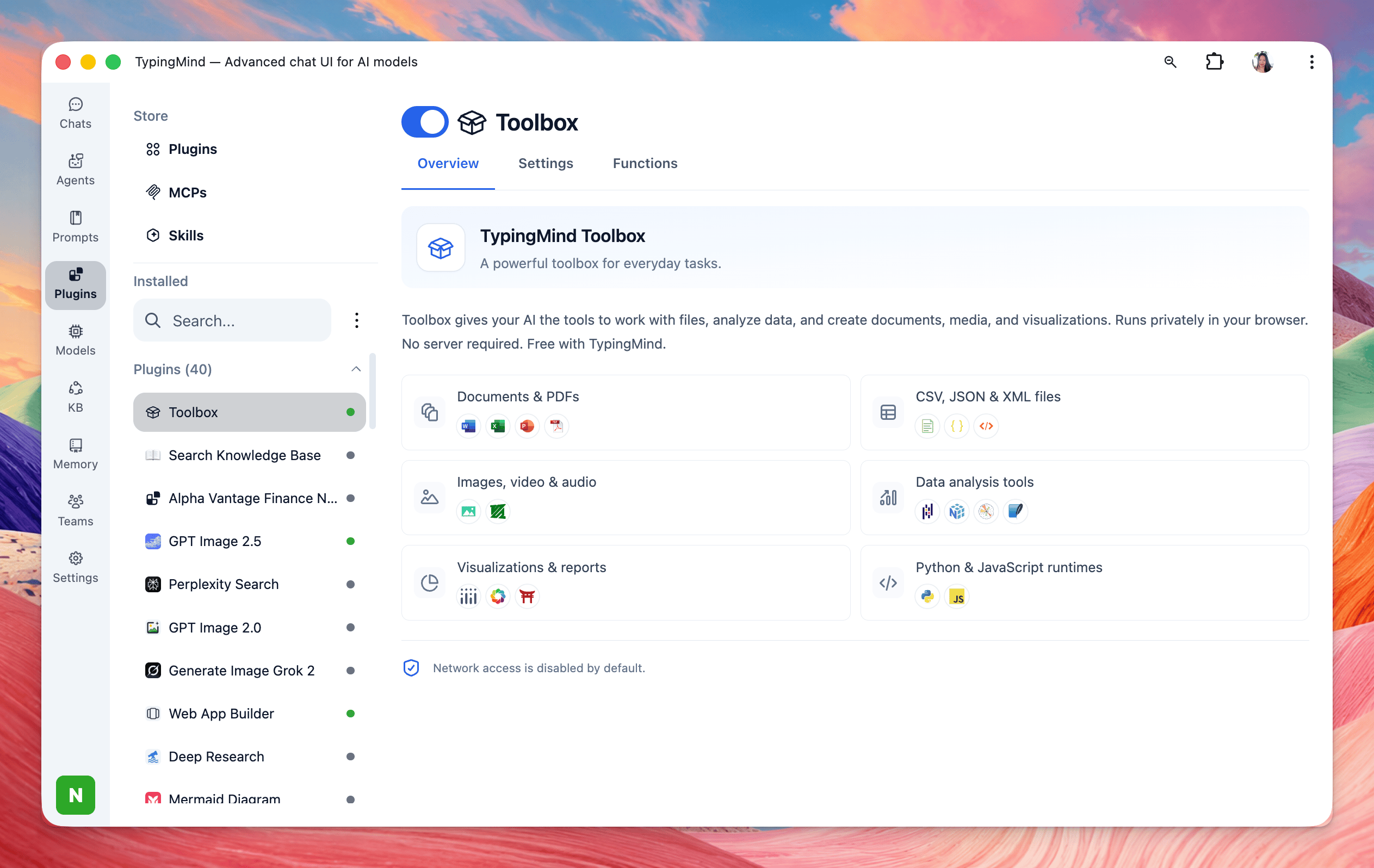
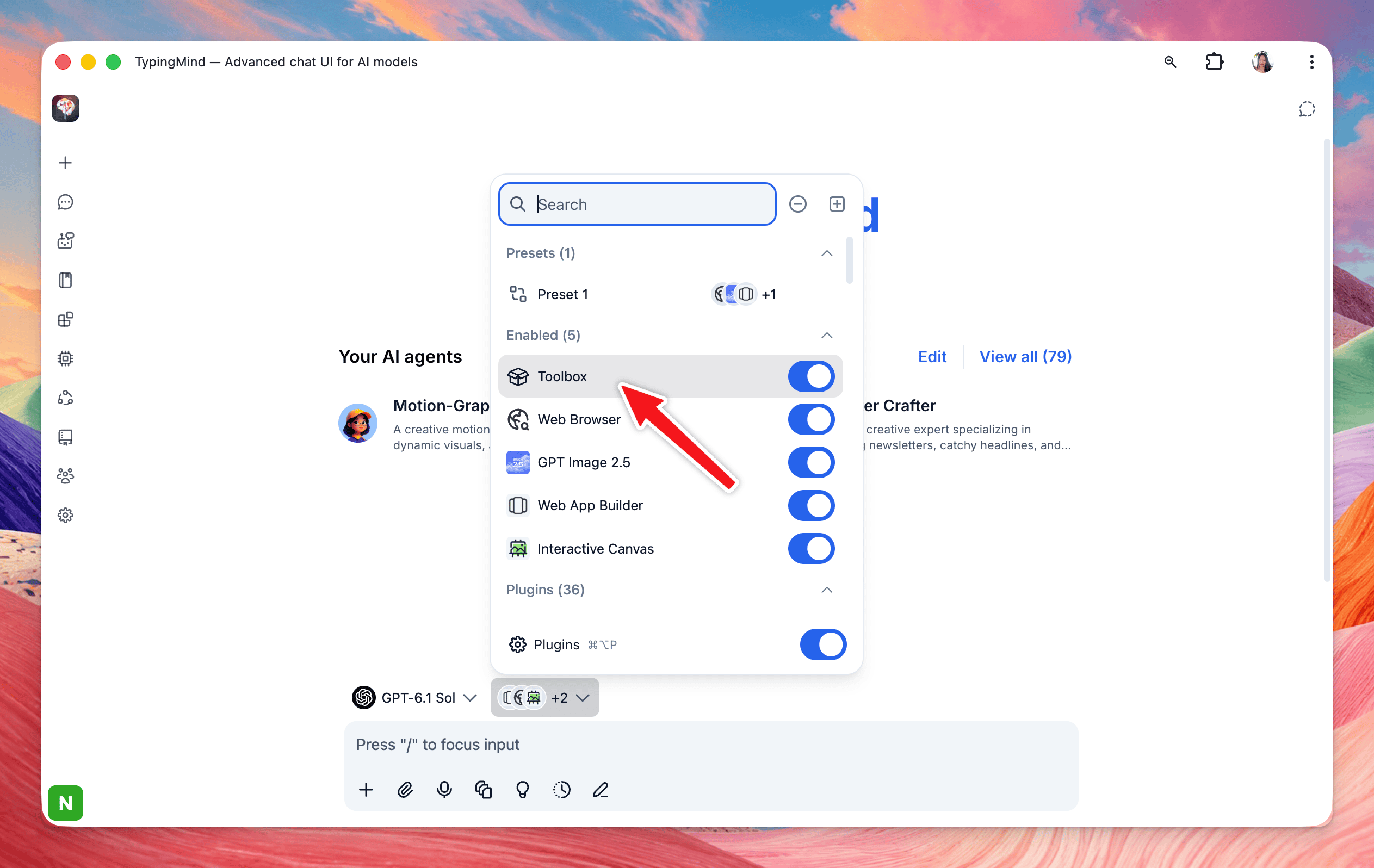
Turning Toolbox on takes about 30 seconds and only needs to be done once.- Click Plugins in the left sidebar.
- Under Installed, select Toolbox from your plugin list.
- Flip the toggle next to the Toolbox title so it turns blue.
- Network access is disabled by default for this plugin. If you want to enable it, please switch to Settings tab to enable.
What Toolbox can do
Toolbox covers six areas, from reading office files to running full Python data analysis. Each area below lists the formats and libraries shown in the Toolbox panel.
You don’t need to know any of these libraries. Describe the result you want in plain language, and the AI picks the right tool.
How it works in a chat
You ask in plain language; the AI writes and runs code in Toolbox, checks the result, and keeps going until the output is ready.- You ask. Attach your files (Excel, CSV, PDF, Word, PPTX images, video, audio) and describe the outcome you want.
- The AI plans and runs code. Each step appears in the chat as a tool call, for example
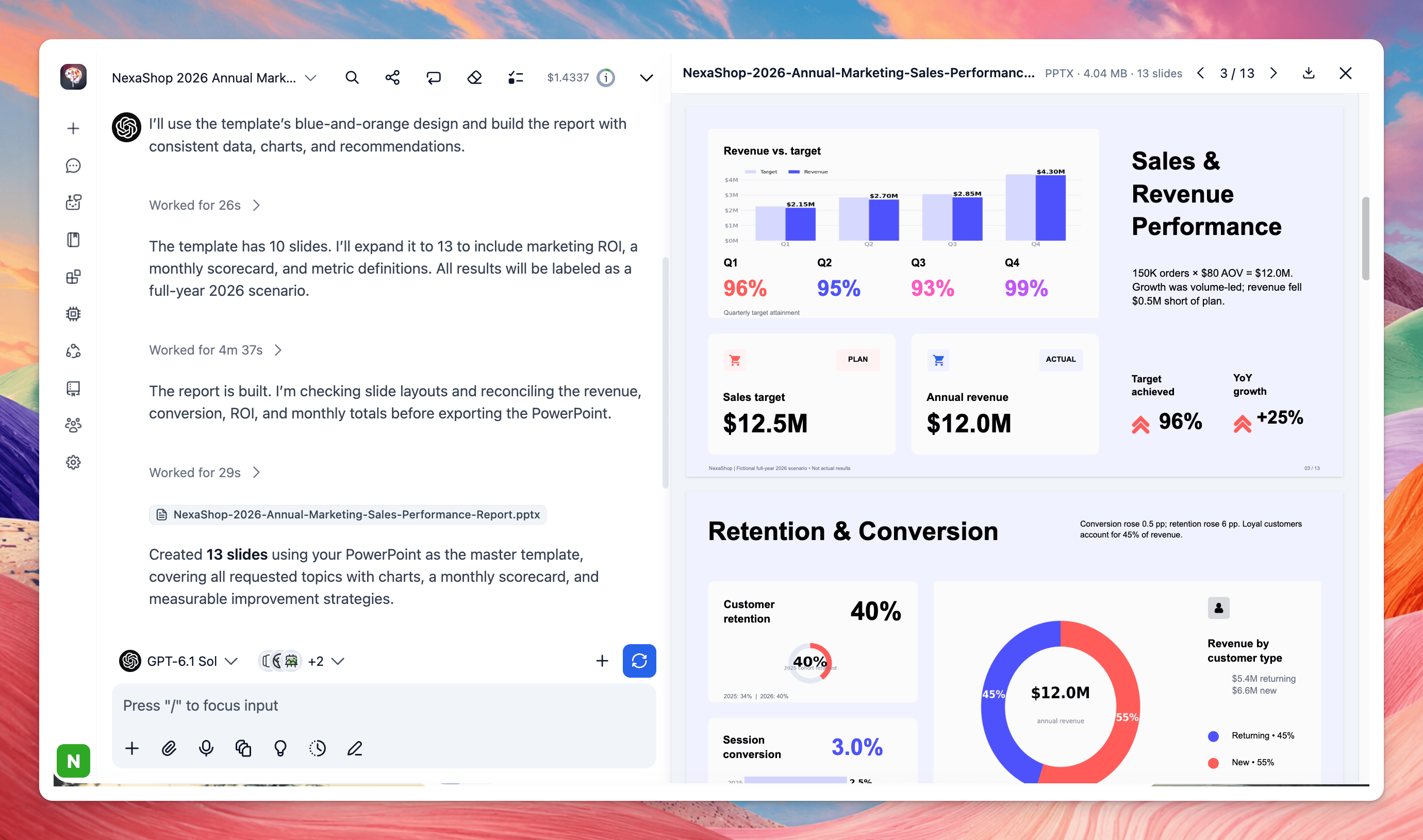
Toolbox Run Python Inspecting PowerPoint template - It checks its own work. For bigger jobs you’ll see many small steps (“Check page space”, “Check watermark coordinates”, “Test copying pages”) before the final output. A “Worked for 2m 23s” label summarizes the run; click it to expand every step.
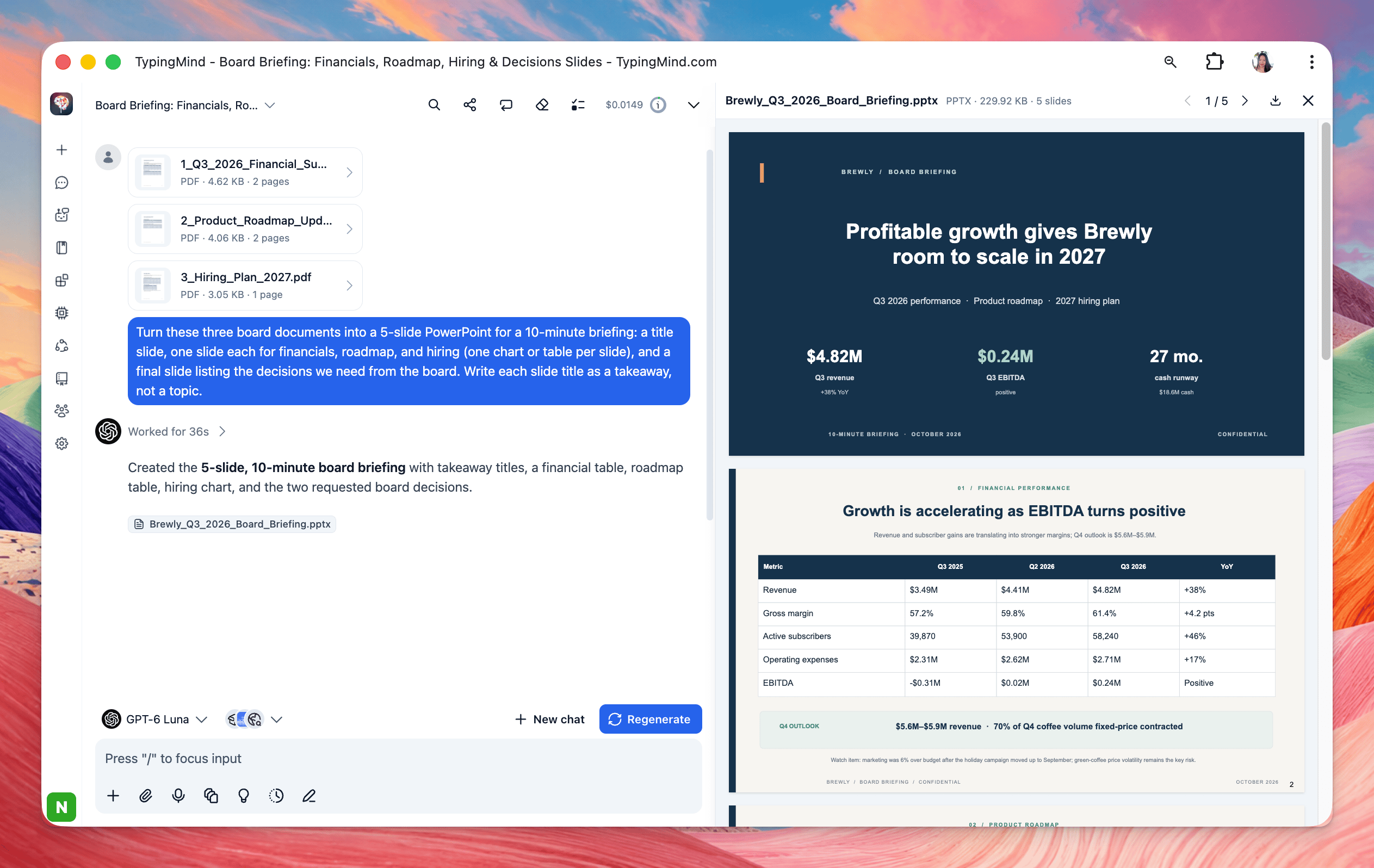
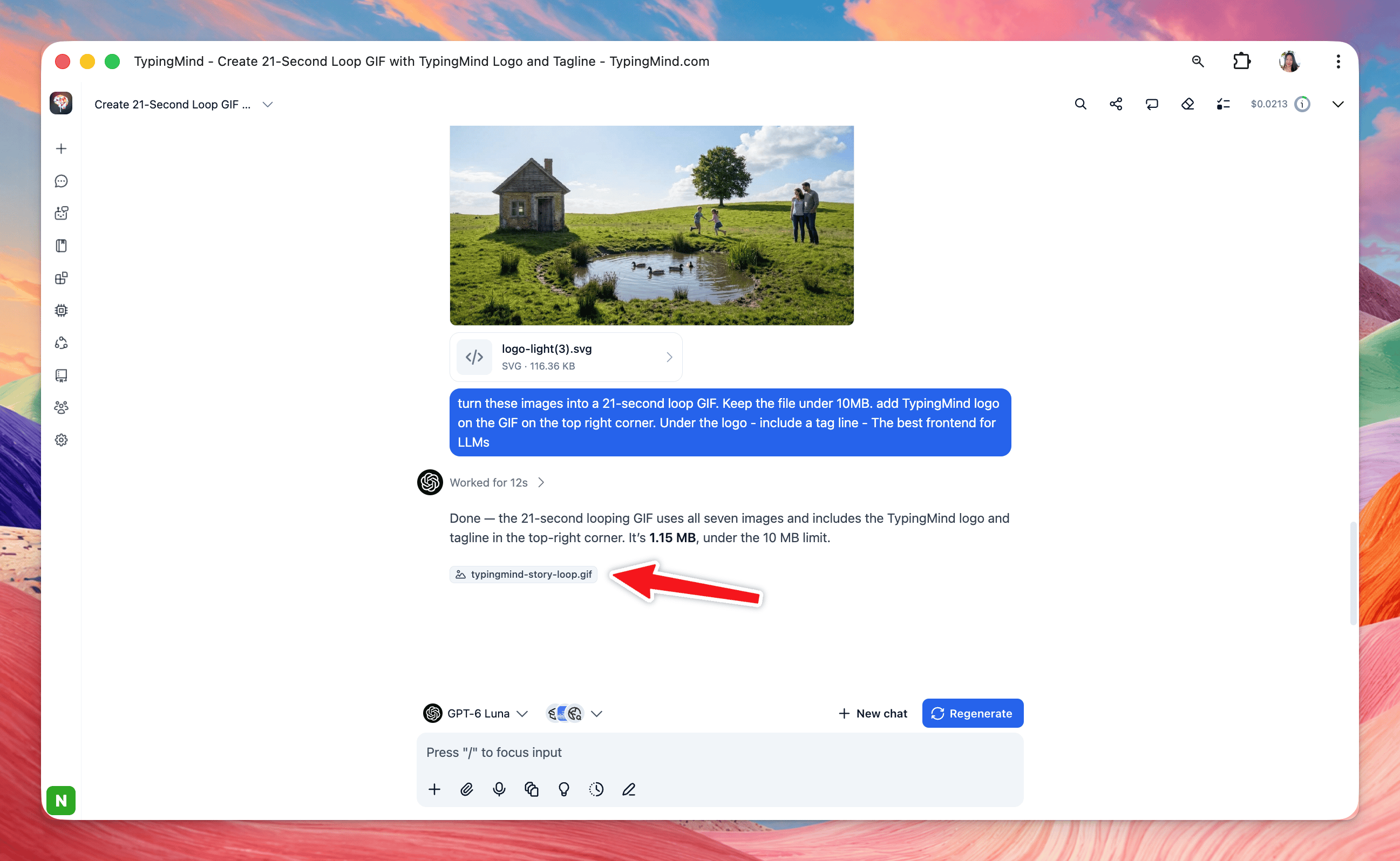
- You get the result. Charts appear inline in the reply. Files appear as cards showing the file name, type, and size.
- Previewing and downloading files: Click a file card to open it in the preview panel on the right. From there you can:
- Page through PDFs/slides and switch between sheets in a spreadsheet using the tabs at the bottom.
- Download the file with the download icon.
- Close the panel with the X.
Privacy, security and network access
Toolbox runs code inside your browser, and network access is off by default, so the code it runs cannot reach the internet.- Where code runs: on your own device, in a sandbox inside the browser tab. TypingMind does not run your files on a server.
- What the AI model sees: the AI provider you chose still receives your messages and whatever the AI reads from your files in order to reason about them, the same as any chat. Toolbox doesn’t change your model provider’s data policy.
- Network access: disabled by default. With it off, code can’t download packages, call APIs, or fetch web pages. If you need data from the web, save the page or file and attach it instead (see the “Saved web page → pricing analysis” use case).
- Sensitive files: because processing happens locally, Toolbox is a good fit for financial data, customer lists, and internal documents. Still follow your organization’s rules about which AI models may see that data.
Practical use cases to try
Below are some common use cases, each with a ready-to-paste prompt. Attach your own file, change the names, numbers, and timestamps to match it, and send.Data analysis
1. Insights dashboard from a sales export. Attach a CSV or Excel export of orders, sign-ups, or licenses. You get a multi-panel chart plus a short explanation of each finding.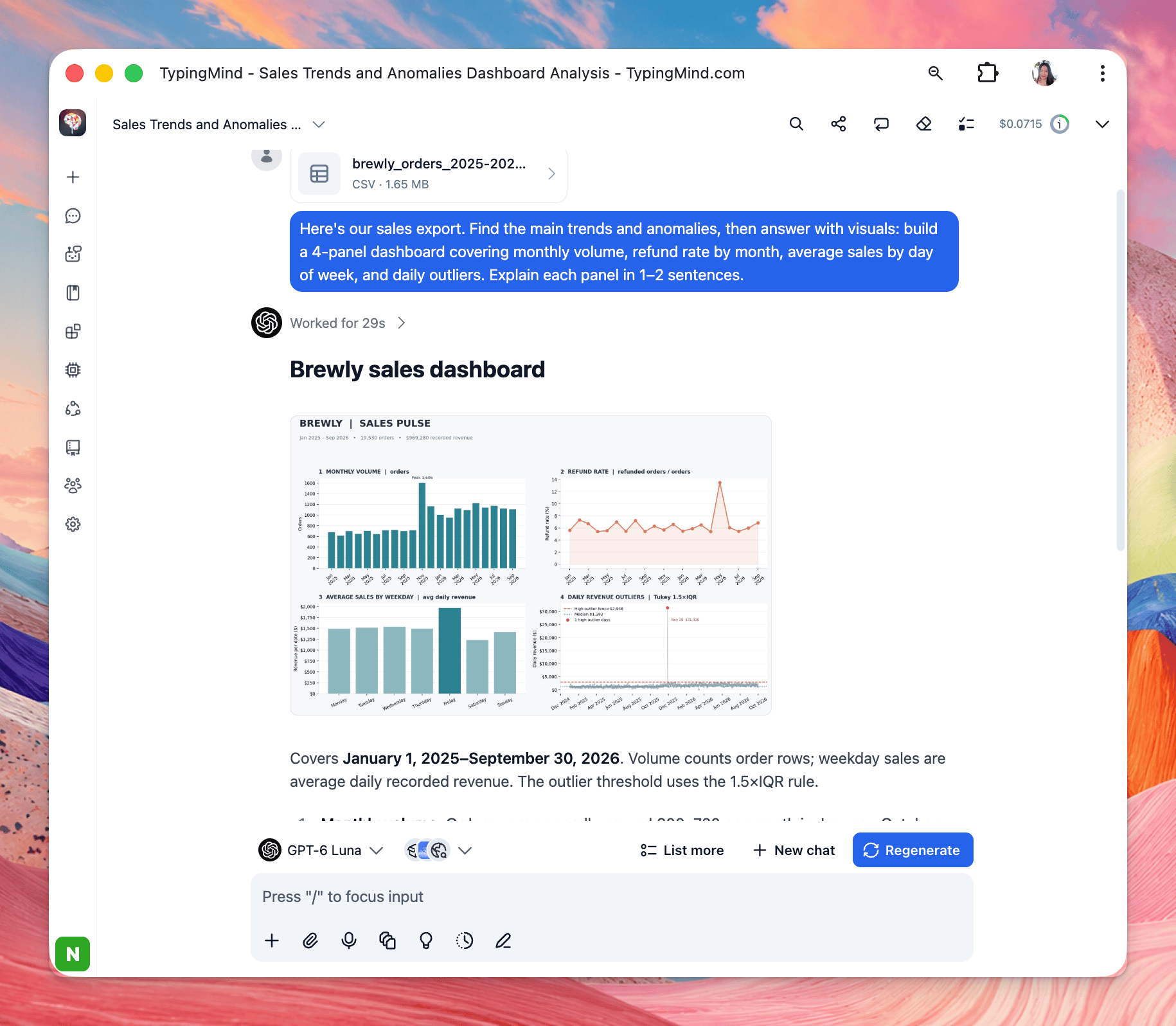
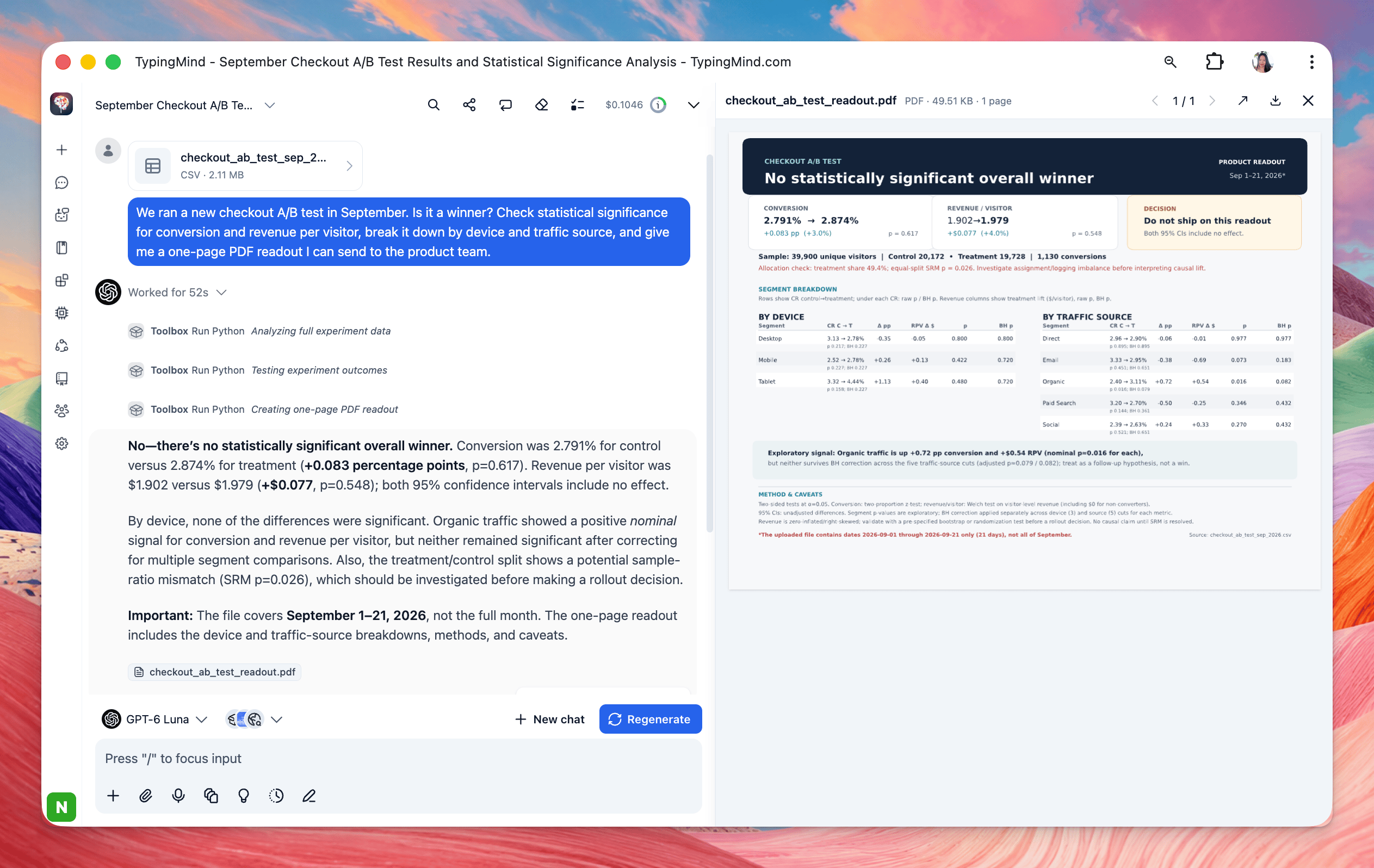
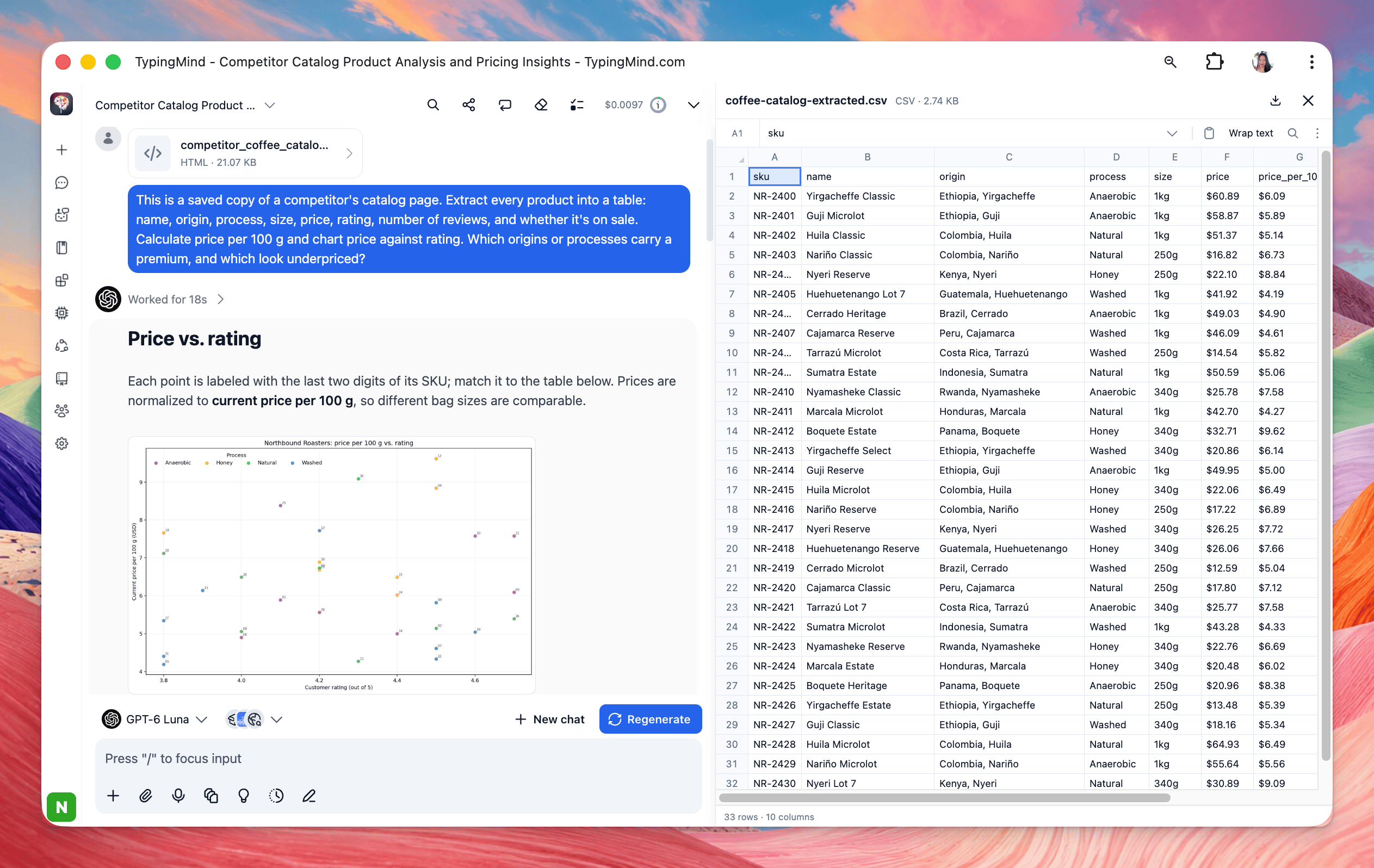
Documents, PDFs and reports
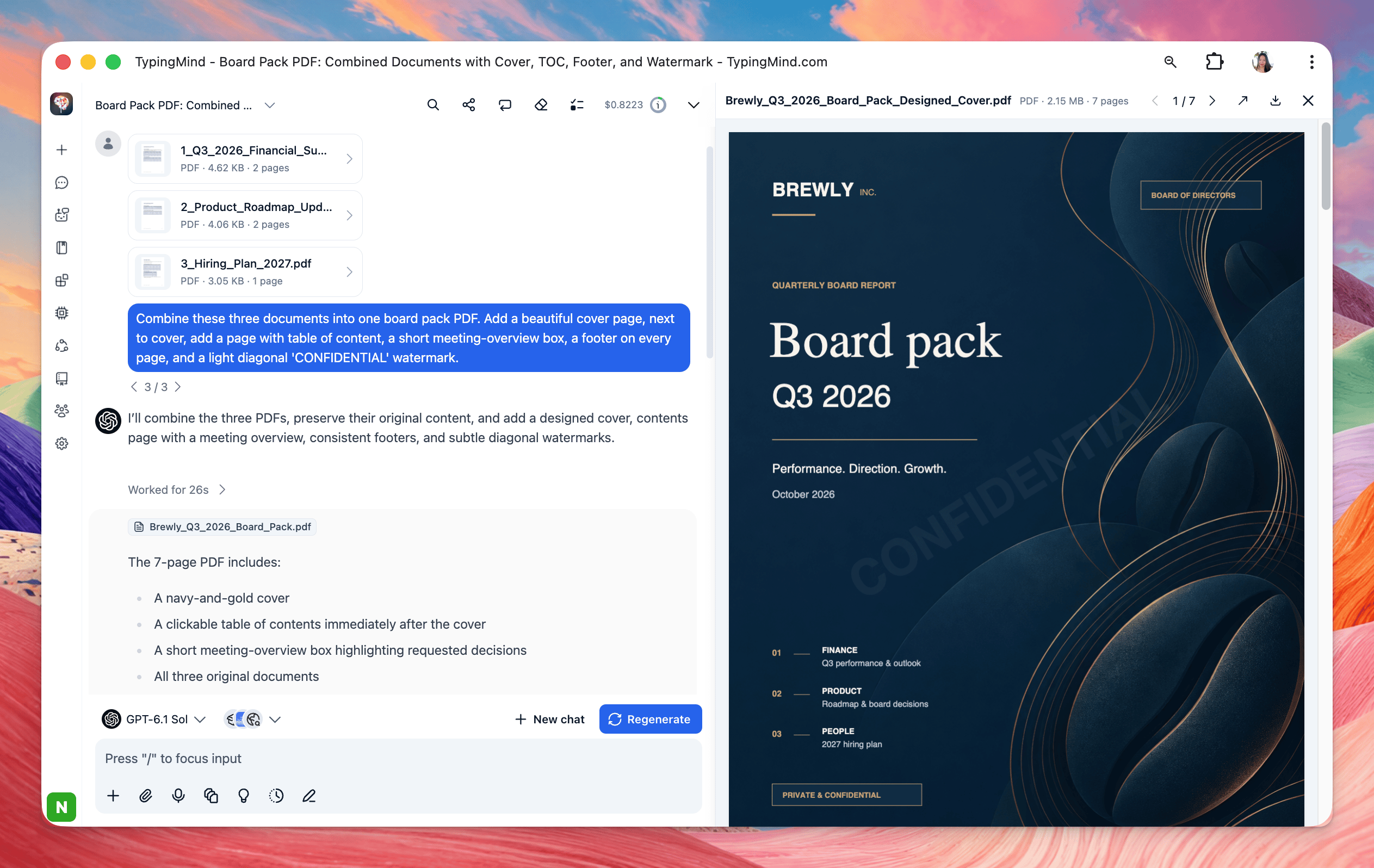
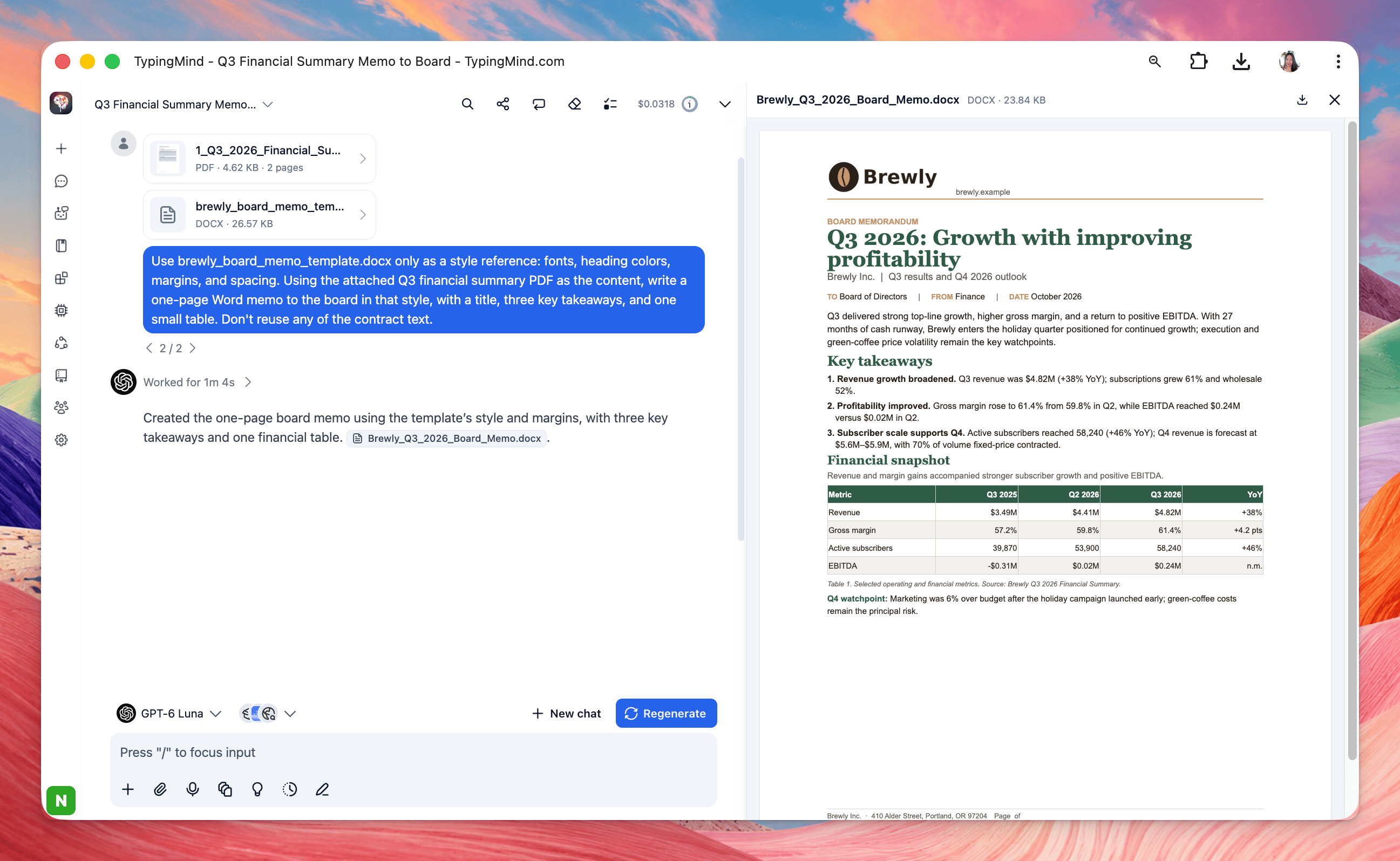
Generate downloadable files such as PDFs, XLSXs, PPTXs, DOCXs, ZIPs and more. You can also upload a template and ask the AI model to match the style of your templates (including fonts, headings, colors, designs)
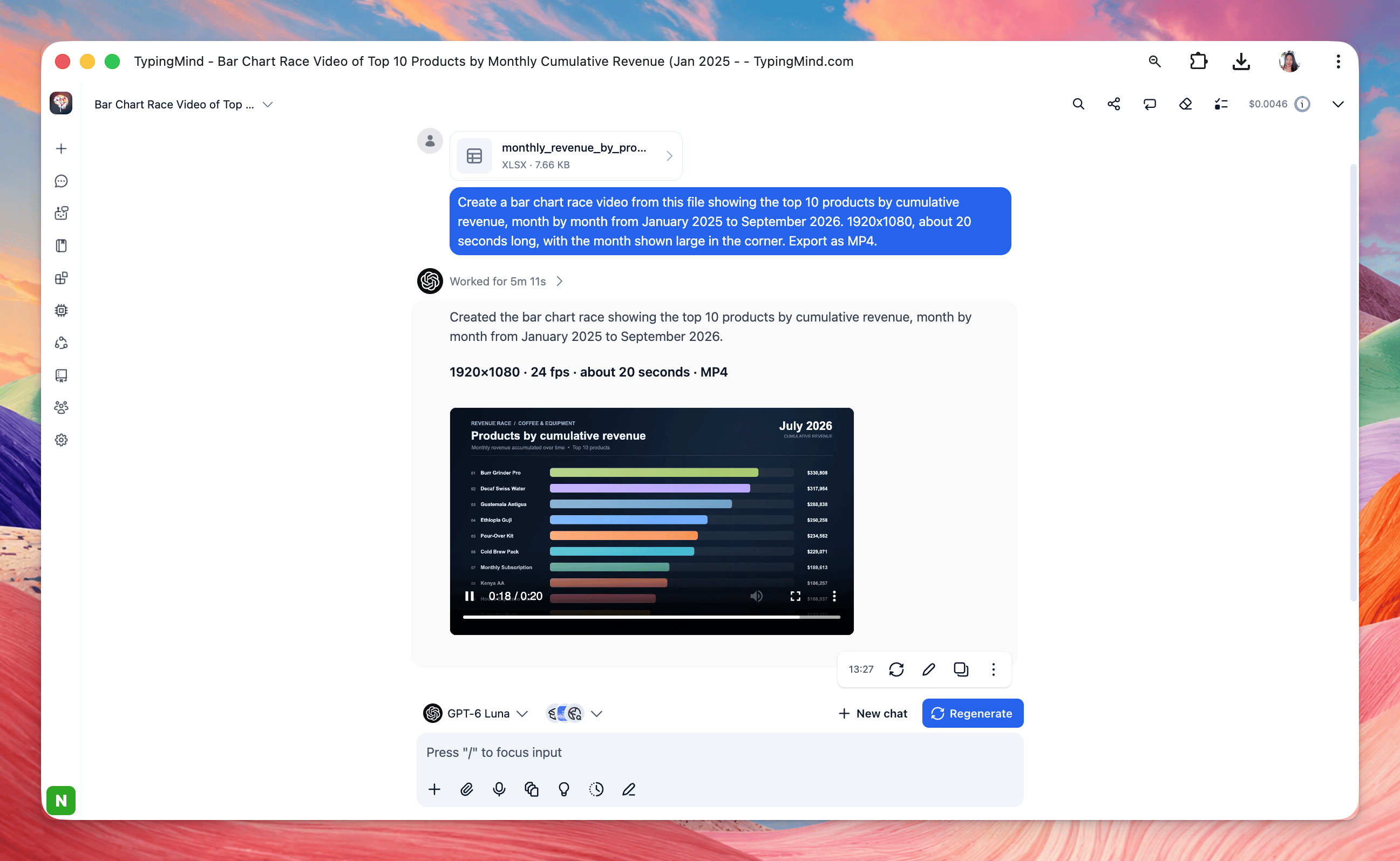
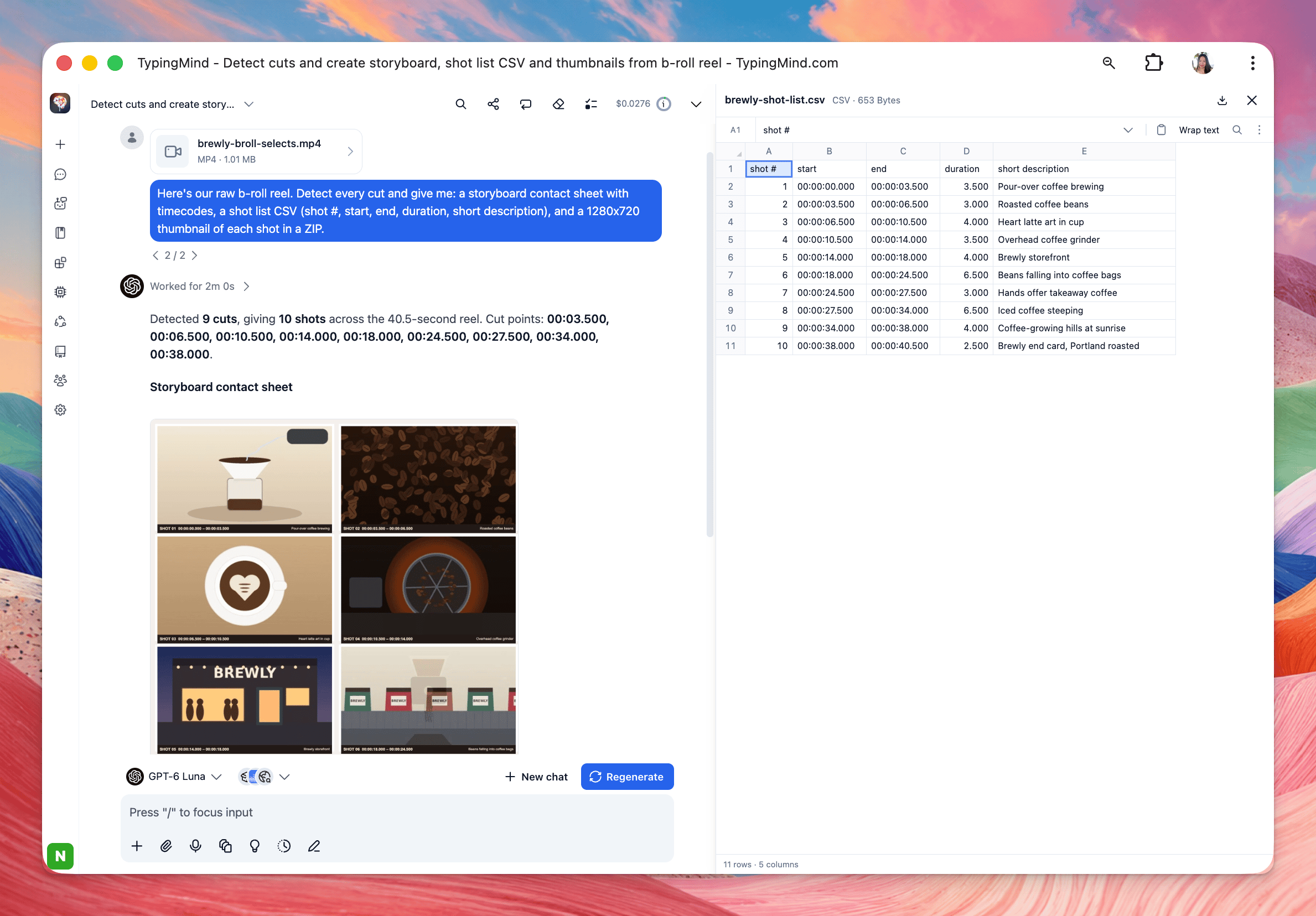
Images, Videos and audio
7. Batch watermark and resize images. Attach your images (and a logo, if you have one). You get every image watermarked in the same spot.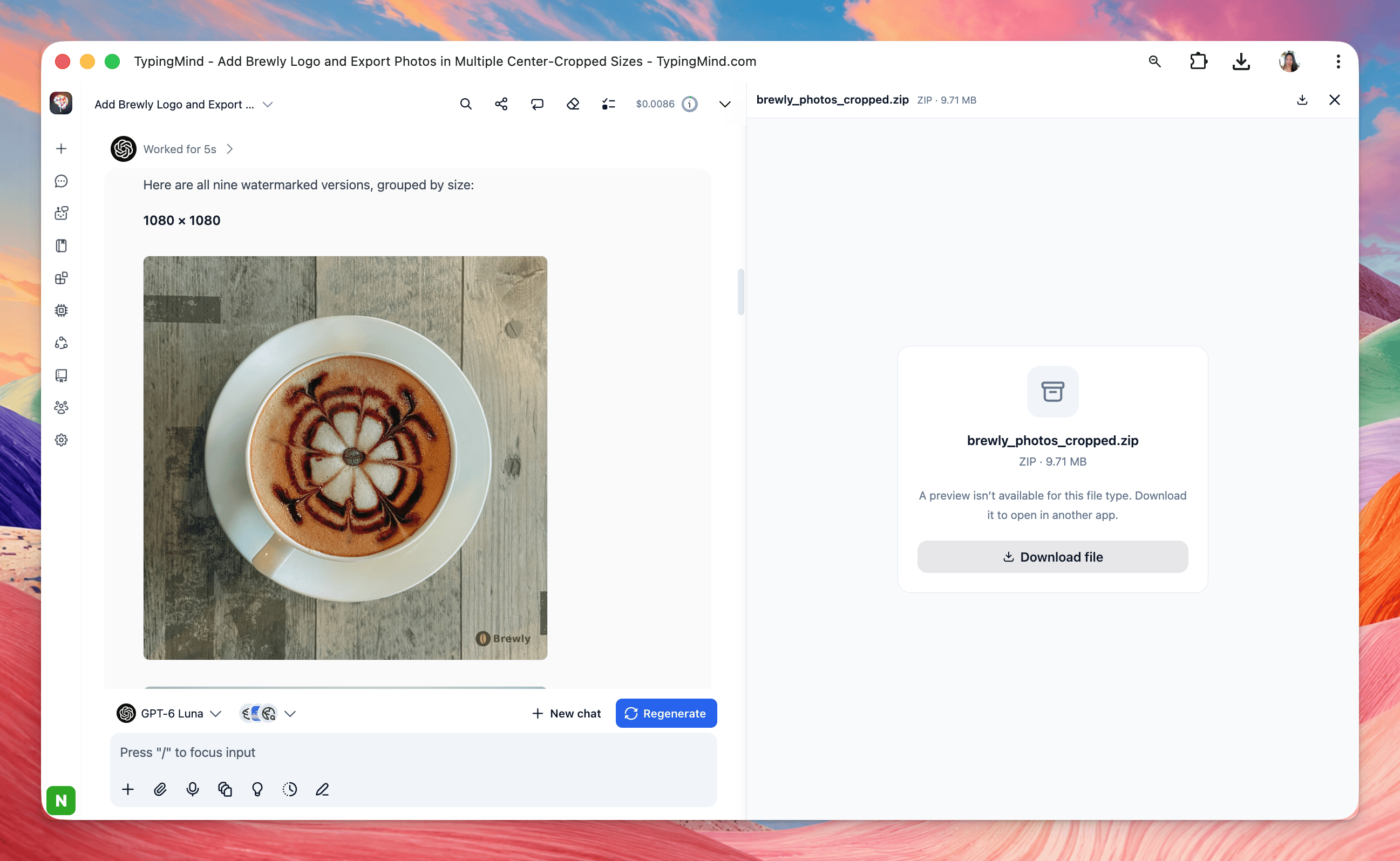

Tips for best results
The clearer you are about the final output, the better Toolbox performs.- Name the deliverable. Say “give me an Excel file”, “a one-page PDF”, or “answer with visuals”. Without it, you may get a text answer only.
- Say who it’s for. “A readout I can send to the product team” or “for the board” changes the tone, length, and polish.
- Ask the real business question. “Did the January loyalty program improve retention?” gets a direct verdict, not just a chart.
- Explain your data. Mention what key columns mean, the date range, and known quirks (“refunds appear as negative amounts”, “the West file has a footer row”).
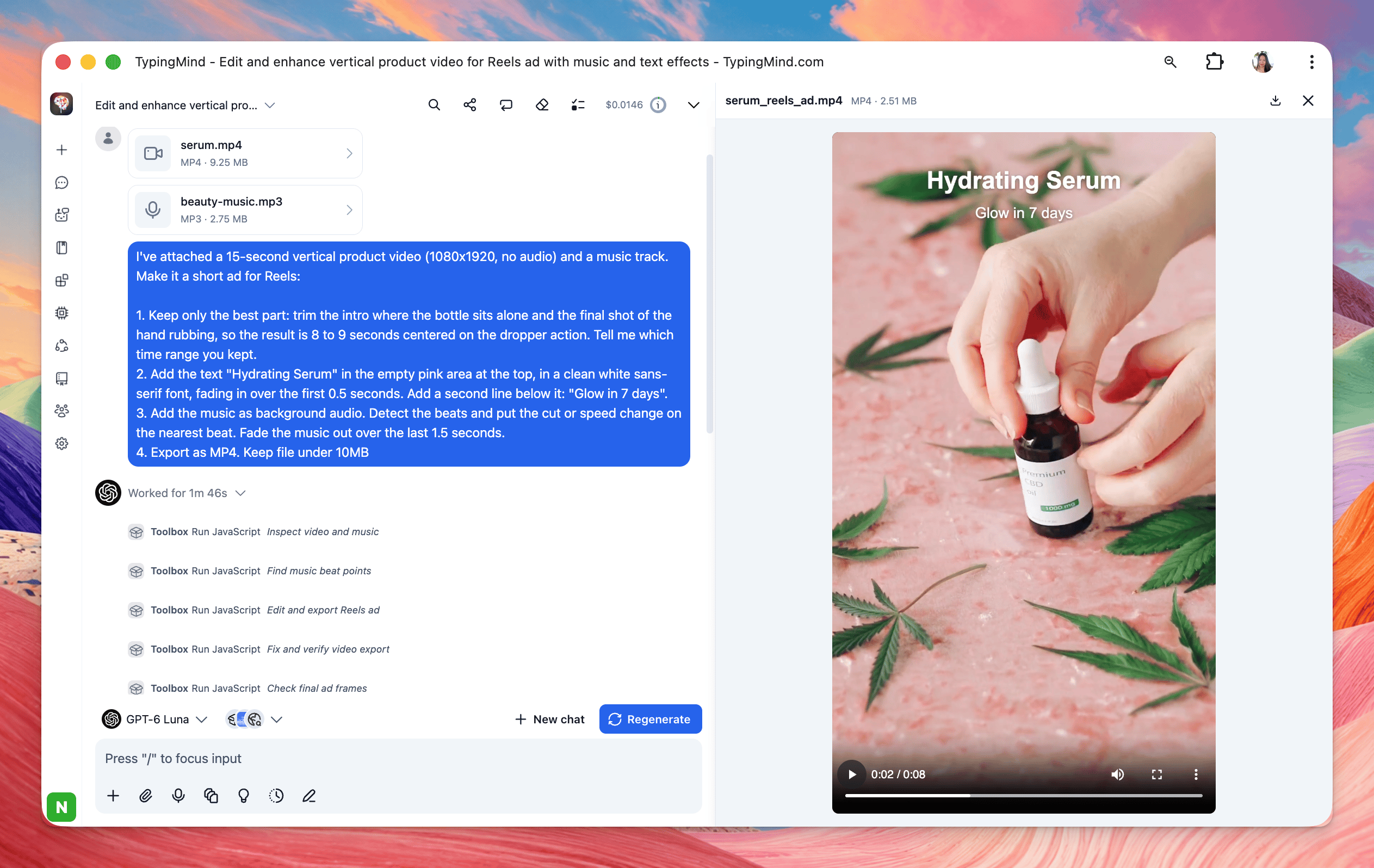
- Be precise with media. Give exact timestamps (“02:15 to 02:45”), pixel sizes or aspect ratios (“1080x1920”, “9:16”), the output format, and a target file size (“under 25 MB”).
- Ask it to flag problems. “Add a sheet flagging anything that looks off” surfaces duplicates, missing values, and mismatched totals.
- Iterate in small steps. Get the analysis right first, then ask for styling, extra sheets, or a PDF version.
- Pick a capable model for big jobs. Multi-step work (merging files, building PDFs, statistics) goes best with stronger models. Lighter models are fine for quick conversions.
- Check the numbers that matter. Expand the “Worked for…” steps to see what was calculated, and spot-check key totals against your source.
Limitations and troubleshooting
Most issues come from Toolbox being off for the chat, a request that doesn’t ask for an output, or a file too large for the browser.
Toolbox can only use the libraries it ships with, since packages can’t be downloaded while network access is off. The Overview tab shows the full list.
Media limits: Toolbox edits and converts images, video, and audio you already have; it doesn’t generate new images with AI. Tasks that need a specialized AI model, such as removing photo backgrounds, transcribing speech to text, or recognizing people in a video, are not built in.